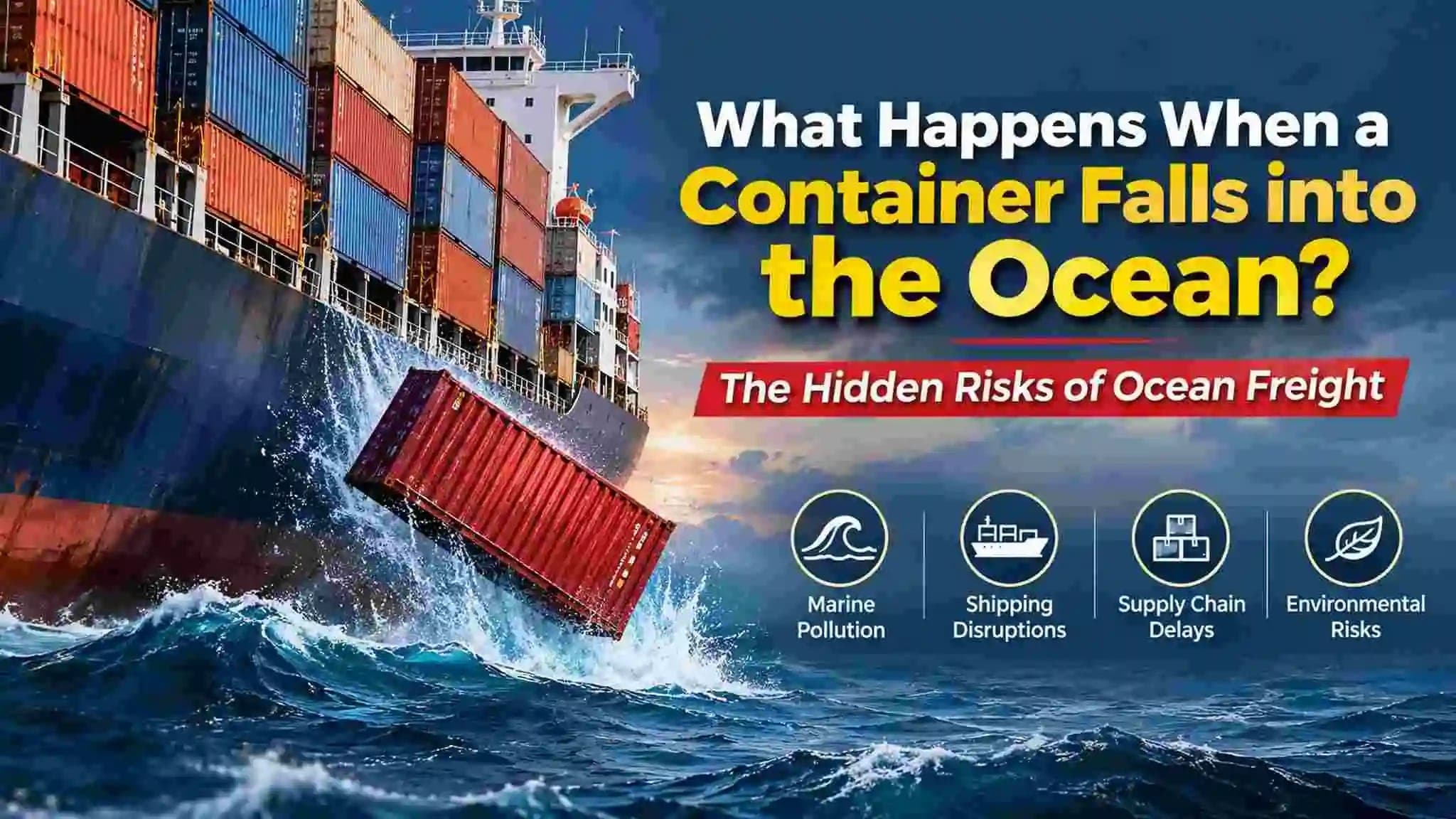
Imagine a massive cargo ship travelling across the ocean when suddenly, a shipping container falls overboard. What happens next? Does it sink immediately, float for days, or become a danger to other vessels? Container loss is one of the unexpected challenges in ocean freight, affecting businesses, shipping companies and the environment. Moreover, a single incident can disrupt international shipping operations and create financial losses across the global supply chain.
Let's explore what happens when a container falls into the ocean and how the shipping industry manages these unexpected situations.
Why Do Shipping Containers Fall into the Ocean?
Container ships transport thousands of containers stacked in multiple rows and layers. Although these containers are secured using specialised locking systems, accidents can still occur during transportation.
Some common reasons include:
Extreme weather conditions: Strong winds and massive waves can cause ships to roll heavily, putting pressure on container stacks.
Improper weight distribution: Incorrect cargo loading can affect vessel stability.
Equipment failure: Damaged twist locks and securing equipment can cause containers to become loose.
Unexpected vessel movements: Sudden changes in direction and rough seas can increase the risk of cargo loss.
Consequently, even carefully planned cargo shipping operations can experience unexpected accidents.
What Happens to Containers During Ocean Freight Transportation?
When a container falls overboard, its fate depends on its weight, contents and condition.
Do Shipping Containers Sink or Float?
Heavy containers carrying machinery, metals or dense materials may sink quickly. However, empty containers or those containing lightweight cargo can remain afloat for some time.
As a result, floating containers can become dangerous obstacles for other vessels. In addition, they may drift far from the original accident location, making recovery difficult.
Can Lost Cargo Damage the Marine Environment?
Yes. Containers carrying chemicals, plastics, batteries and other hazardous materials can create environmental risks if their contents escape into the ocean.
Furthermore, damaged packaging and floating debris can contribute to marine pollution. Therefore, container accidents are not just a concern for shipping companies but also for marine ecosystems.
How Does Container Loss Affect Global Shipping and International Shipping?
The consequences of container loss can extend beyond the vessel involved in the accident.
For example, imagine a container carrying automotive components intended for a manufacturing facility. If those components are lost, production schedules may be delayed.
Similarly, businesses importing electronics, machinery or essential materials may face additional expenses and delivery disruptions.
Meanwhile, freight forwarding companies must coordinate with customers, arrange alternative transportation and manage revised delivery schedules. Thus, one incident can affect several stages of global shipping and freight transportation.
How Do Shipping Companies Prevent Container Loss?
Fortunately, shipping companies follow several safety measures to minimise cargo-related accidents.
These include:
Regular inspection of container securing equipment.
Proper cargo loading and weight distribution.
Weather monitoring and safer route planning.
Crew training and vessel safety procedures.
Improved cargo monitoring and tracking systems.
Although these precautions cannot eliminate every risk, they help strengthen maritime transport and shipping logistics operations.
Build Your Future in the Shipping and Logistics Industry
Understanding real-world challenges such as container loss, cargo handling and international freight operations is valuable for anyone interested in logistics as a career.
For aspiring professionals, developing practical industry knowledge is an important step towards entering this growing sector.
If you are looking for the best logistics institute in Kerala, explore the educational opportunities at SMEC Institute of Management.
Visit SMEC Institute of Management to learn more about its logistics education programmes and career-oriented learning opportunities.
Final Thoughts
A container falling into the ocean may appear to be an isolated accident. However, its consequences can affect businesses, consumers, shipping companies and marine ecosystems worldwide.
As global trade continues to depend on ocean freight, improving container safety and transportation practices remains essential for a more reliable shipping industry.