
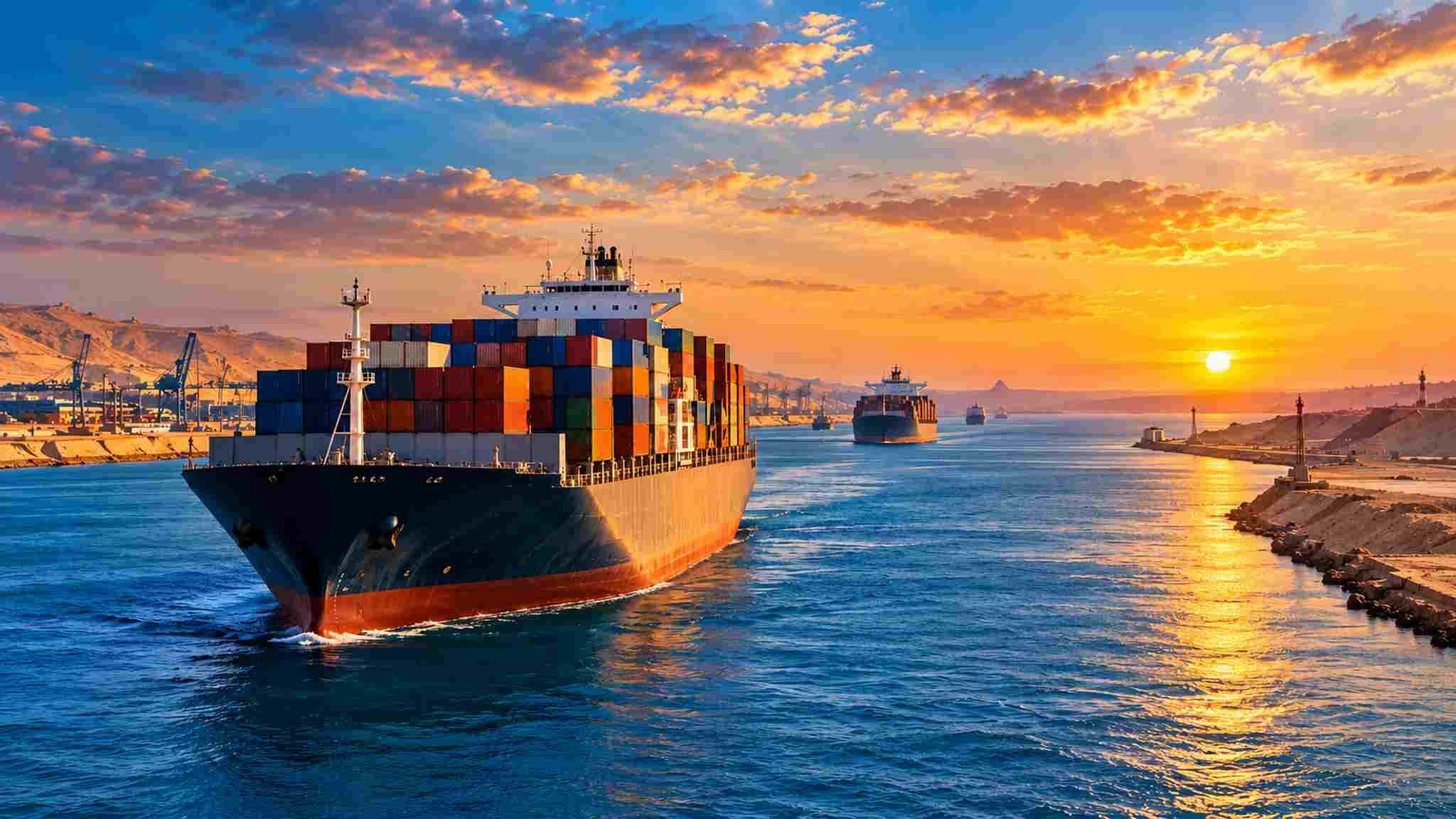
For nearly three years, the Red Sea has been one of the biggest challenges facing global shipping. Security threats around the Red Sea and Bab el-Mandeb forced many shipping companies to avoid the Suez Canal and take the longer route around the Cape of Good Hope.
Now, the situation is beginning to change.
Recent shipping data indicates that more vessels are returning to the Red Sea and Suez Canal. Lloyd’s List Intelligence reported that Suez traffic averaged 287 weekly transits between August 31 and September 27, compared with 252 in June. However, security concerns remain, meaning the industry has not yet returned completely to normal.
So, what does this mean for marine logistics?
A Potential Shift in Global Shipping Routes
The Suez Canal is one of the world's most important maritime trade routes, connecting Asia and Europe while significantly reducing sailing distances compared with the Cape of Good Hope route.
When shipping lines diverted around Africa, voyages became longer, increasing fuel consumption, transit times and operational costs.
A gradual return to the Suez route could therefore bring several benefits:
Shorter transit times
Better vessel utilisation
Improved schedule planning
Potentially lower voyage costs
More predictable Asia-Europe supply chains
However, shipping companies must continue balancing these advantages against security risks.
What It Means for Marine Logistics Professionals
The Red Sea situation demonstrates why modern marine logistics is about much more than moving cargo from one port to another.
Logistics professionals need to understand how geopolitical events, vessel routes, port operations, fuel costs and security conditions can influence the entire supply chain.
A change in a shipping route can affect:
Vessel schedules → Port operations → Container availability → Inland transportation → Warehousing → Final delivery
This makes route planning, risk management and real-time decision-making increasingly important skills in the maritime industry. Professionals with strong knowledge of marine logistics management can play an important role in helping companies respond to such changes efficiently.
What Should Businesses Do?
Importers and exporters should not assume that shipping conditions will remain fixed. Businesses should continue monitoring carrier announcements, reviewing transit times and maintaining alternative routing plans.
The key lesson from the Red Sea disruption is simple: supply chains need flexibility.
Even as more vessels return to the Suez Canal, companies should remain prepared for sudden changes caused by geopolitical developments, security concerns or operational disruptions.
The Future of Marine Logistics
The recovery of Red Sea shipping is more than a story about one maritime route. It highlights how quickly global logistics can change.
For aspiring logistics professionals, this creates a growing need for practical knowledge of shipping operations, ports and terminals, cargo handling, multimodal transportation, marine insurance, EXIM and supply chain risk management.
At SMEC Institute of Management, our Professional Program in Marine Logistics focuses on these practical areas to help learners prepare for careers across shipping, ports, freight forwarding, EXIM and the wider logistics industry.
As global shipping continues to evolve, the demand for skilled professionals is also creating new marine logistics jobs across shipping companies, ports, freight forwarding firms and logistics service providers.
Interested in building a career in marine logistics? Explore the Marine Logistics program at SMEC Institute of Management.