
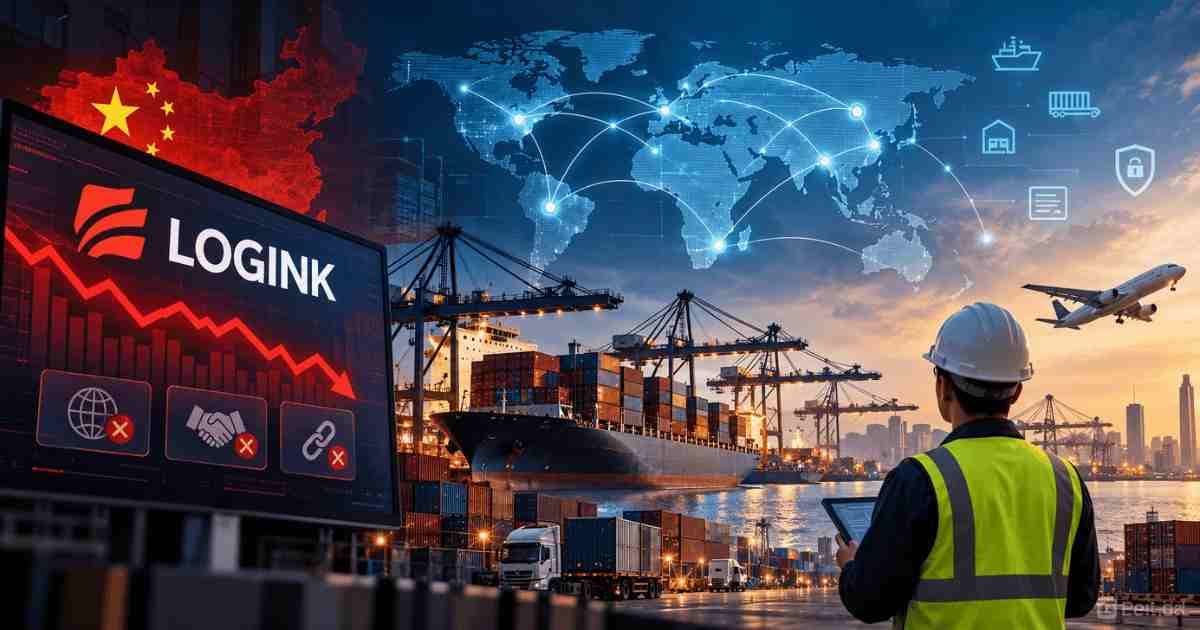
Global supply chains are becoming increasingly digital. Ports, shipping companies, customs authorities, freight forwarders and manufacturers now depend on data to coordinate the movement of goods. In this environment, China’s LOGINK was designed as an ambitious platform for connecting logistics information across borders.
However, LOGINK’s international expansion has recently lost momentum, creating an important case study for the future of Supply Chain Management.
What Is LOGINK?
LOGINK, officially known as the National Transportation and Logistics Public Information Platform, began as a Chinese initiative to improve logistics information sharing. It was designed to bring together data from ports, transport providers, customs and other logistics participants through a common digital platform.
The idea was simple: better access to logistics data could reduce information gaps, improve coordination and make international trade more efficient. LOGINK eventually expanded its ambitions beyond China and explored partnerships with ports and logistics systems in several countries.
Why Is LOGINK Losing Ground?
Recent developments indicate a dramatic shift in LOGINK's worldwide positioning. Reuters reported in October 2026 that several of its international partnerships had stalled, its participation in an international maritime association had ended, and its website had gone offline. The platform has also faced legal and financial difficulties within China.
One major challenge has been data security and geopolitical trust. U.S. officials raised concerns about the potential use of logistics data and subsequently introduced restrictions involving LOGINK and related logistics platforms. At the same time, some countries that had explored cooperation with LOGINK have reduced or stopped their involvement.
This shows a fundamental reality: contemporary logistics and supply chain management rely on digital infrastructure for more than just efficiency. . Data ownership, cybersecurity, transparency and national interests can also influence whether a technology is accepted internationally.
What Does This Mean for Supply Chain Management?
The LOGINK situation highlights the importance of building supply chains that are both connected and resilient. Companies cannot depend entirely on one platform, data source or technology ecosystem.
Future supply chain professionals need to understand more than transportation and warehousing. They must also be familiar with digital logistics, data analytics, risk management, international trade and technology governance.
This is why professional education is becoming increasingly valuable. A supply chain management certification can help learners develop knowledge of modern logistics processes while preparing them to understand how technology and global events influence business operations.
The Bigger Lesson for Future Logistics Professionals
LOGINK’s changing global position shows that the future of logistics will depend on trust, flexibility and digital capability. Companies will increasingly need professionals who can work with multiple systems, evaluate supply chain risks and make data-driven decisions.
For students planning a career in this field, learning Supply Chain Management is therefore not limited to understanding how goods move from one location to another. It means understanding the entire network behind global trade and how technology is transforming it.
Build Your Future in Logistics
For students seeking to gain industry-specific knowledge and abilities in logistics and supply chain industries, SMEC Institute of Management offers career-oriented programs tailored to the logistics sector's changing demands. Learning the fundamentals of Supply Chain Management today can help aspiring professionals prepare for the increasingly digital and interconnected world of global trade.