



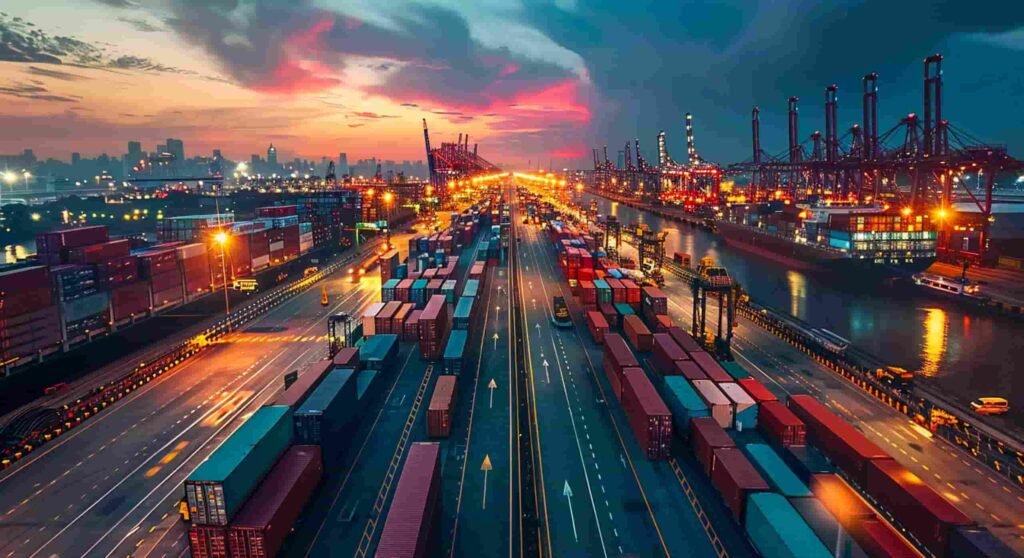
Kochi is not simply another city; it is a port-based economy, and a Marine Logistics course in Kochi puts you right at its commercial heart.
Every day, hundreds of containers travel through shipping lanes, ports, and international waters. Behind all of this is a specialised field known as marine logistics.
Here’s an opportunity:
Most people are unaware that this career exists, despite the fact that employers are actively seeking candidates.
If you want a one-of-a-kind, fast-growing job with worldwide exposure, marine logistics is the place to be.
What is Marine Logistics?
Marine logistics is a subfield of logistics that specialises in port management, shipping, and maritime transportation.
It deals with the transportation of goods from one nation to another across oceans.
Key areas consist of:
- Transportation-related activities
- Coordination and port management
- Management of cargo
- Logistics for import and export of vessels
To put it simply:
It is logistics, but on a worldwide, maritime level.
Why Marine Logistics course in kochi is Growing Fast in 2026
This isn’t just hype; there are legitimate reasons for the demand.
1. Global Trade Depends on Shipping
- Over 80% of global trade occurs via marine channels.
2. India’s Port Development Push.
- Government investments in port facilities are driving up logistics demand.
3. Increased Import and Export Activity.
- As more organisations expand globally, there is an increased demand for shipping expertise.
4. Shortage of Skilled Workers
- There is a mismatch between demand and skilled professionals in marine logistics.
That difference equals opportunity for you.
What Marine Logistics Looks Like in Real Life
A single cargo shipment travelling from Dubai to Kochi includes:
- Vessel scheduling for international routes
- Port Slot Coordination at Cochin Port
- Customs clearance and documentation.
- Cargo unloading and container handling
- Inland transit following port arrival.
A single delay in any stage can:
- Costs thousands of dollars.
- Disrupt the corporate processes.
- Delay the entire supply chain
Marine logistics professionals solve these difficulties in real-time.
What Happened After Global Supply Chain Disruptions
After 2020, the maritime industry experienced chaos:
- Ports were blocked worldwide.
- Container shortages became widespread.
- Freight expenses increased dramatically.
- Delivery times become uncertain.
- Even in India, importers and exporters experienced delays due to port backlogs and inadequate coordination.
- This revealed one serious concern.
- There were not enough competent professionals to handle advanced logistics operations.
That absence still remains in 2026.
Why is Kochi becoming a marine logistics hotspot?
Kochi is important not only geographically, but also strategically in terms of worldwide shipping routes.
Real-world advantages:
- Cochin Port manages international cargo and container traffic.
- Increasing import/export business with Middle Eastern countries.
- Expansion of logistics parks, port infrastructure
- Existence of shipping agents and goods moving firms
This generates a direct environment in which:
- Training plus local exposure equals faster job opportunities.
Where the Real Demand Is Right Now (2026)
Marine logistics demand is fuelled by:
- International Trade Growth
India’s trade volume is growing, particularly with the Gulf countries and Asia.
- Port Modernisation
Government-backed infrastructure initiatives are increasing port capacity.
- Containerisation
More commodities are being delivered in containers, which raises operational complexity.
- Supply Chain Digitisation
Companies increasingly want experts that understand both logistics and basic technology systems.
This combination is unusual, which is why trained candidates stand out.
What Actually Makes You Job-Ready
If you’re serious about getting into marine logistics, focus on:
- Practical training versus theoretical
- Understanding actual shipping documentation.
- Understanding how ports and cargo flow actually operate.
- Getting placement support
Final Thoughts: Is Marine Logistics Worth It?
If you want anything:
- Less crowded than IT and general business
- connected to global trade.
- With real long-term demand.
Then marine logistics is a good investment.
To succeed, it’s important to prioritise talents over certifications.